

Rethinking the Materials We Bring Into Our Homes.
I recently watched a documentary on Netflix called The Plastic Detox, and it has really stayed with me. It made me stop and think about how much plastic has become part of our everyday lives, often without us even noticing it.
I’ve always known that plastics aren’t good for the environment, but I didn’t realise exactly how pervasive plastics are or how many different ways we’re exposed to plastic-related chemicals in our everyday lives.
Everything from plastic spatulas to hand soaps, cleaning products and shampoos, it suddenly felt like plastic was everywhere.
Probably the most startling part of the documentary was its focus on human health. It explored the potential effects of chemicals associated with plastics, including hormone disruption and fertility, and raised questions about what this ongoing exposure could mean not just for us, but for future generations too.
Yet what gave me some hope was learning that our exposure isn’t entirely fixed. The documentary highlighted how making relatively small changes to the things we buy, how we cook and store food, and the products we use every day can help reduce the levels of these substances in our bodies.
It made me start looking around my own home differently.
And as an interior designer, that got me thinking about something else: what are we actually bringing into our homes?
I spend a lot of time thinking about materials, how they look and feel, how they work together, how well they’ll stand up to everyday life and, importantly, how long they’ll last.
But perhaps we should be thinking about them a little differently too.
Could we be designing our homes with more thought about what they’re actually made from?
What’s it made from?
We naturally think about how something looks when we’re choosing things for our homes. Does the colour work? Do I love the shape? Does the texture feel right? Will it work with everything else in the room?
But perhaps there’s another question worth asking: What’s it made from?
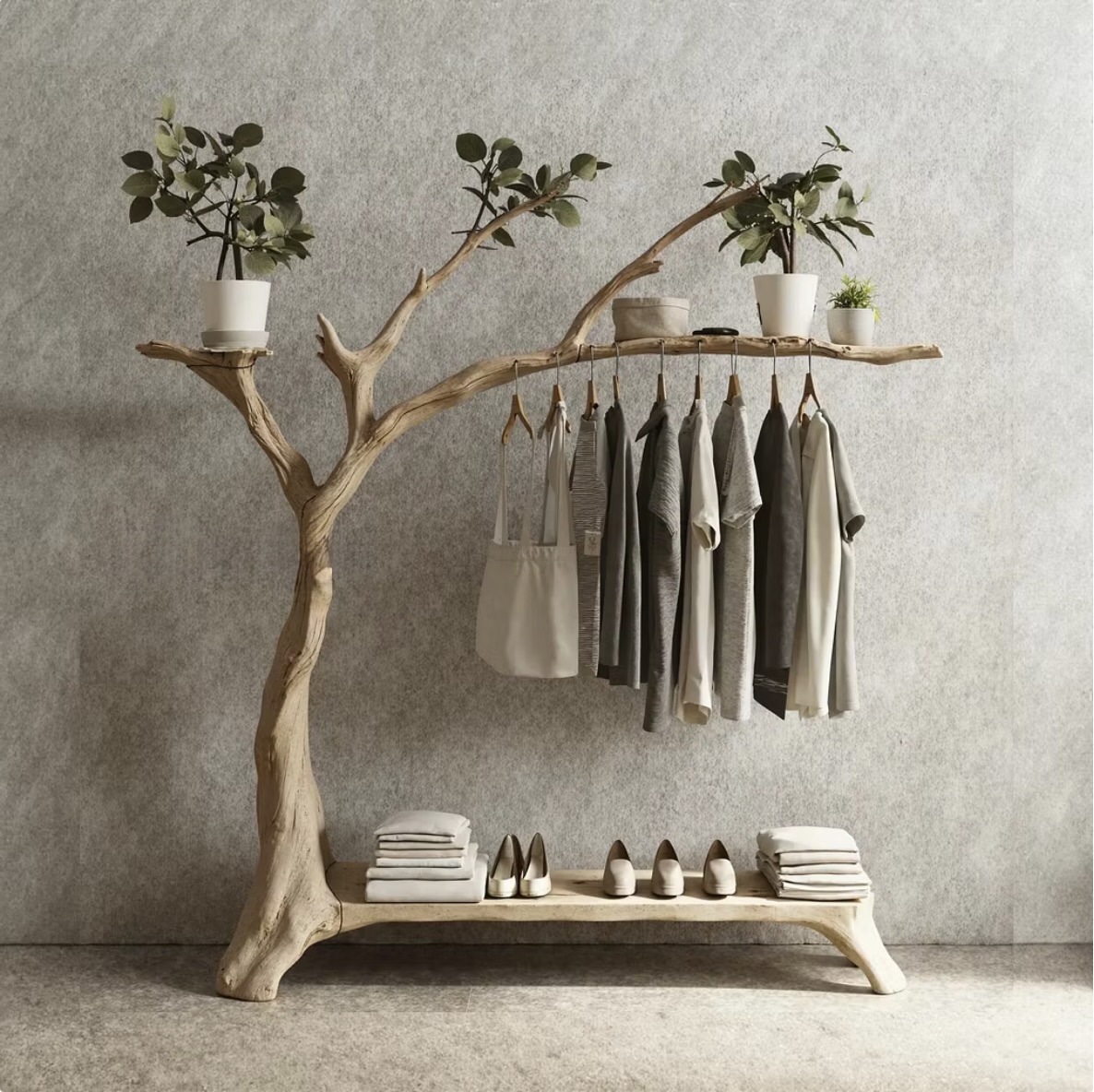
Could we choose more natural materials where they make sense? Timber rather than a synthetic alternative. Wool rather than a plastic-based fibre. Linen or cotton for curtains and upholstery. Glass, ceramic and stainless steel in place of plastic where they’re practical.
I hadn’t always thought about what the things I was choosing were actually made from. I’m not suggesting no plastic, but to be a little more thoughtful of the choices we’re making, are there better alternatives?
The kitchen is a good place to start
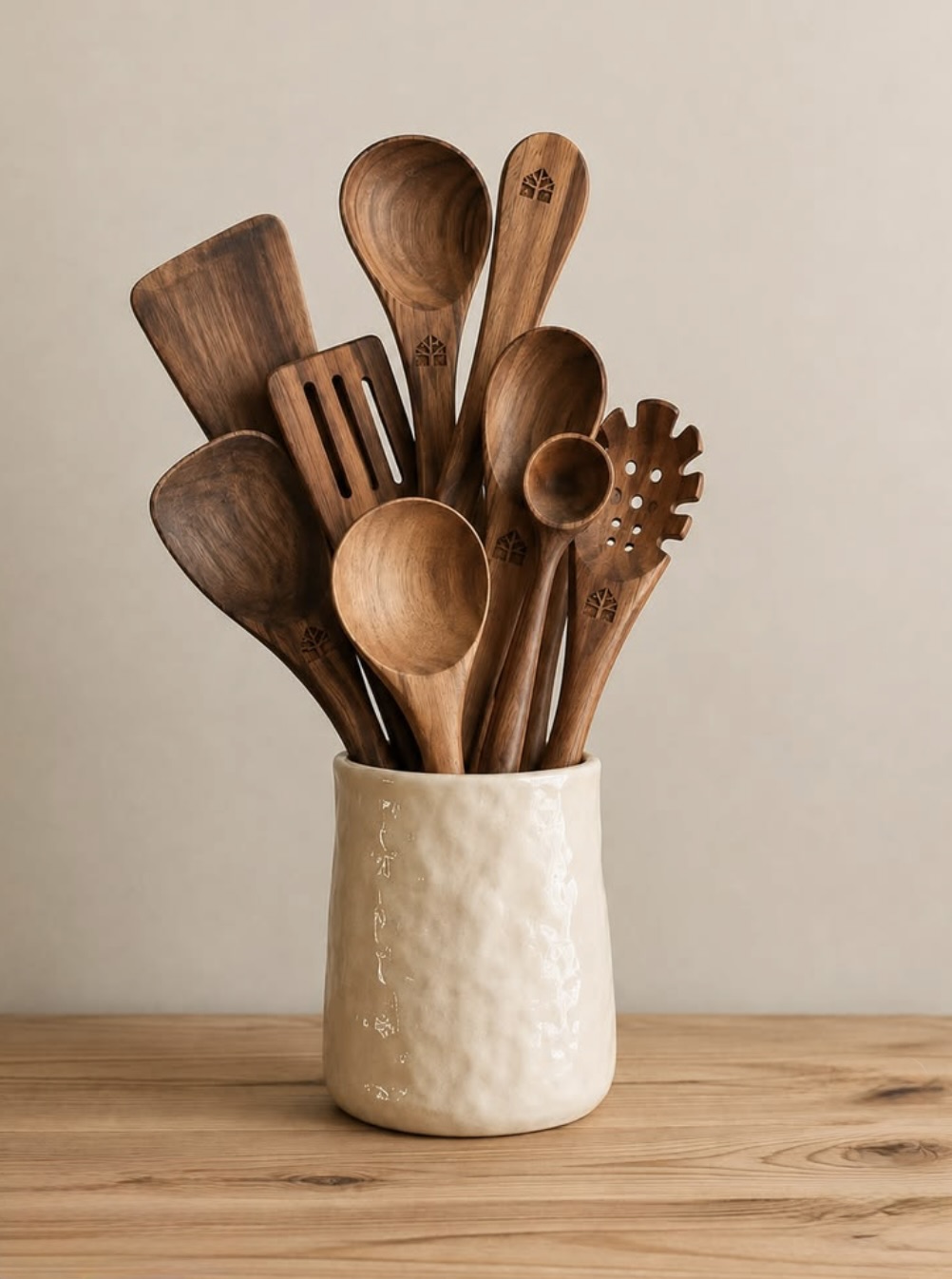
The kitchen is probably one of the easiest places to start making a few small changes.
There are many good and attractive alternatives to the plastic items we often grab without thinking. A lovely timber chopping board, wooden or stainless-steel utensils and cookware, glass or ceramic storage jars that are designed to last or be a beautiful display piece.
Even the everyday products such as hand soaps, washing-up liquids and cleaning products are increasingly available with cleaner ingredients and using less plastic packaging. I’ve found that these ones are often much better looking sitting on the bench too.
Furniture and soft furnishings
This is probably an area where I’ll be looking a little more closely from now on.
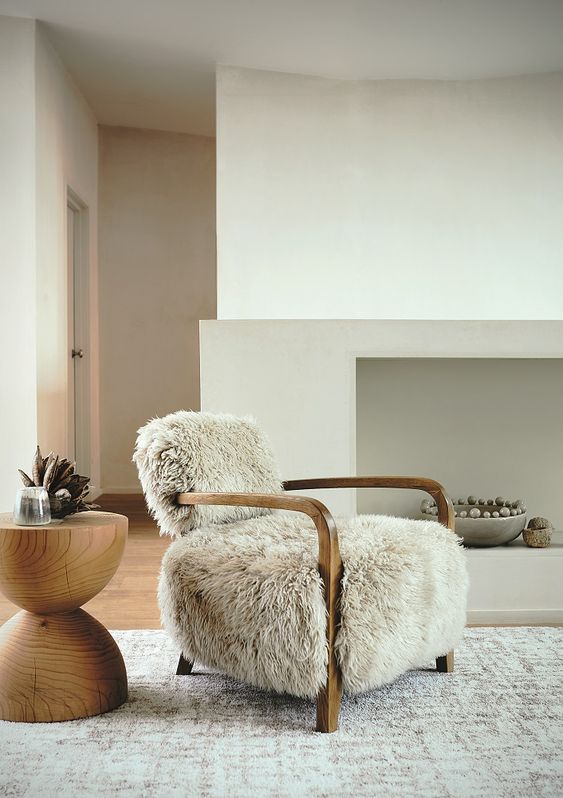
When it comes to soft furnishings, I naturally gravitate towards linen, cotton and wool anyway. I love the way natural fabrics look and feel — they have a softness and texture that can be difficult to replicate.
But it’s made me think beyond what we see on the outside, too. What is actually inside our sofas, chairs, cushions and mattresses? What are manufacturers using for the filling, padding and lining?
These aren’t necessarily things we think to ask when choosing a piece of furniture, but perhaps they’re worth considering.
I’m also encouraged by the fact that some furniture and upholstery brands are becoming more conscious of this shift. You can increasingly find options to choose different upholstery constructions or upgrade the internal materials — for example, choosing wool over more conventional synthetic fillings.
For me, this isn’t about suddenly specifying only natural materials. It’s about having options and making a more informed choice.
Choose well, buy less
I’m not suggesting we we never buy plastic, or that we can or should eliminate plastic from our homes entirely. There are plenty of practical, well-designed plastic-based products, and sometimes they’re simply the right choice.
For me, it’s more about becoming conscious of what I’m choosing.
The documentary has made me want to slowly reduce the amount of plastic I’m exposed to in my own everyday life, rather than trying to change everything overnight. As things need replacing, I’ll be looking a little more closely at what I’m buying and whether there’s a better alternative.
And perhaps that’s the point.
These might seem like small choices, but we make them every day. We don’t have to change everything at once. We can simply start noticing what we use, what it’s made from, and asking ourselves:
Is there a better option?
For me, that’s what I’ve taken away from The Plastic Detox. Not that we need to live perfectly, but that we can be a little more conscious about the things we bring into our homes — and perhaps, in doing so, create homes that are not only beautiful and liveable, but a little more thoughtful too.